Your skin barrier, explained: what research says about melanin-rich skin
Why "barrier first" is more than a slogan, and what the studies on skin of color actually show.
- Studies comparing skin types show mixed results: some find lower ceramide levels in Black skin, others find lower water loss.
- Researchers say more diverse studies are needed before drawing firm conclusions.
- Consistent moisturizing, gentle cleansing and protecting the barrier before correcting are well supported.
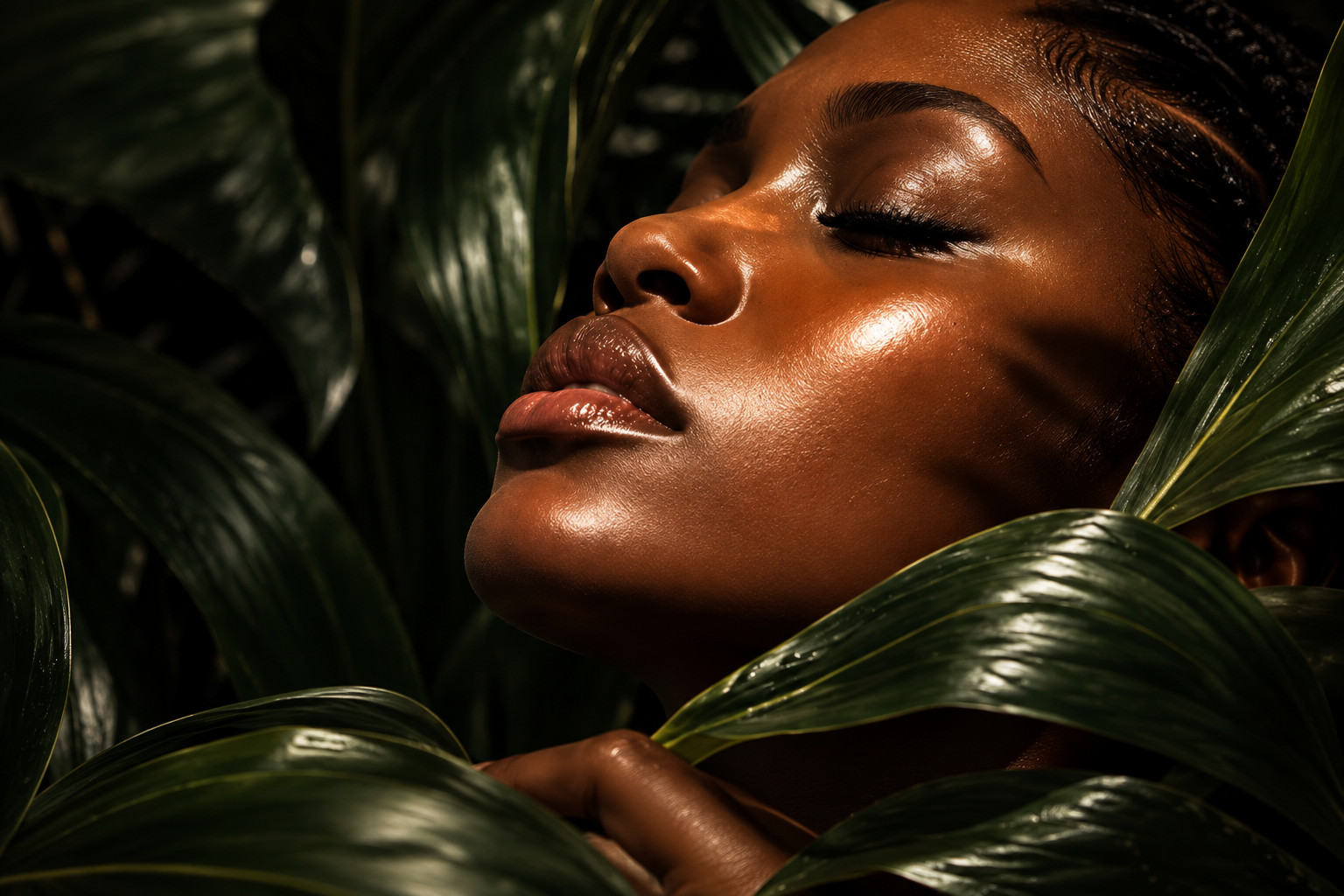
Your skin barrier is the outermost layer of skin, the stratum corneum. Think of it as a brick wall: skin cells are the bricks, and a mix of lipids (fats), including ceramides, is the mortar. When that wall is intact, it holds water in and keeps irritants out. When it's disrupted, skin can feel tight, look dull or ashy, sting easily and become more reactive.
Does barrier function differ in darker skin?
Researchers have compared the barrier across skin types for decades. A 2023 review in the Journal of Clinical and Aesthetic Dermatology summarized several of these studies:
- Ceramide levels. An early study by Sugino and colleagues (1993) found the highest ceramide levels in Asian skin, followed by White skin, then Black skin. Lower ceramide content is linked to higher water loss and to barrier problems seen in conditions such as eczema.
- Water loss. Other studies measured transepidermal water loss (TEWL), the water that escapes through the skin. Muizzuddin and colleagues (2010) found lower facial TEWL in African American participants than in East Asian participants, and Wilson and colleagues (1988) found lower TEWL on the cheeks and legs of Black women compared with White women.
In other words, the findings are mixed. Some measures suggest a sturdy barrier, while lower ceramide levels suggest skin may be more prone to dryness. The review's author is clear that "more robust and diverse research is needed" before drawing firm conclusions.
What this means for everyday care
The research doesn't support one-size-fits-all rules for any skin tone. It does support a few principles that sit at the heart of DÉRA:
- Treat ashiness as information. A gray or ashy cast is often visible dryness. It's a signal to support the barrier, not something to cover up.
- Moisturize consistently. A large Cochrane review of 77 trials found that moisturizers helped people with eczema: fewer flares, a longer time before the next flare and less need for steroid creams. Consistency mattered more than any single brand.
- Cleanse gently. Harsh cleansers and over-exfoliation strip the lipids your barrier depends on.
- Protect before you correct. Irritated skin responds unpredictably to active ingredients, and in melanin-rich skin, irritation can leave dark marks behind.
Every Skin OS starts with the barrier. Green Cheetah™ focuses on hydration and works as a supportive layer alongside any other system.
Sources
- Sangha AM. Dermatological conditions in skin of color: physiological nuances in skin of color and their clinical implications. J Clin Aesthet Dermatol. 2023;16(2 Suppl 1):S12–S13. Source
- van Zuuren EJ, Fedorowicz Z, Christensen R, Lavrijsen APM, Arents BWM. Emollients and moisturisers for eczema. Cochrane Database Syst Rev. 2017;(2):CD012119. Source
This article is for education only and is not medical advice. Talk with a licensed clinician about your own skin.

Green Cheetah™ · Barrier + Hydration